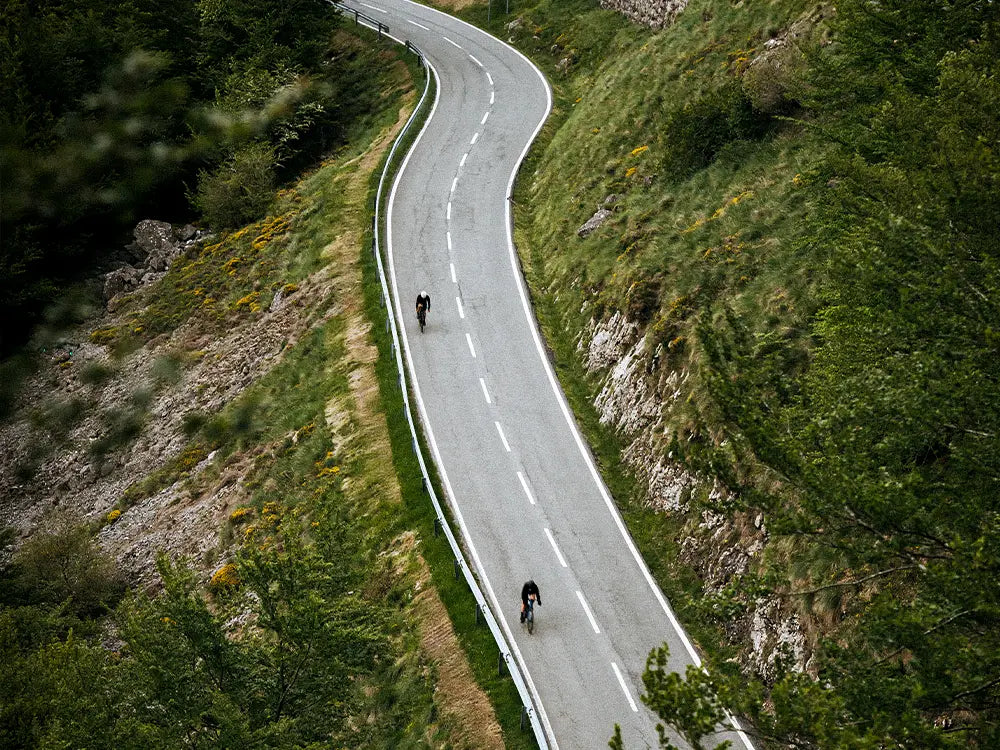



This July, Barcelona becomes the starting point of the Tour de France. The Grand Départ 2026 begins in the Catalan capital with two opening stages across the region, placing the city at the center of the cycling world.
For local cyclists, the appeal is obvious. Barcelona offers sea, city, mountains, and roads that invite you to explore, all highly accessible from the center. It is a place where a short ride can follow the Tour route through Montjuïc, while a longer day allows you to quickly move from urban streets to quiet climbs and coastal roads.
The first stage of the Tour will be a team time trial through the city, starting near the Fòrum and finishing beside the Estadi Olímpic. One day later, the race returns from Tarragona, crossing southern Barcelona before another finish on Montjuïc. Together, both stages are a clear invitation to discover the city: do you dare to ride the roads before the peloton arrives?
Route 1: Grand Départ Loop – From the Fòrum to Montjuïc
- Distance: 19.7 km
- Elevation gain: 230 m
This is the route that starts it all. Beginning near the Fòrum, following the seafront promenade and the wide avenues, this course will host the first battle for the yellow jersey of the 2026 Tour de France: the team time trial.
The opening kilometers are fast along the Mediterranean, with the city on one side and the sea on the other. From there, the route heads inland toward some of Barcelona’s most recognizable landmarks, such as the area around the Sagrada Família. The climb to Montjuïc presents the real challenge of the stage; a short ascent, but one with history. Olympic roads, old memories of past races, and views over the city.
For cyclists who want to explore more, this route can easily be extended by heading south. This segment offers the perfect experience to ride the same roads where the teams will compete in the Grand Départ.
Route 2: Barcelona - Collserola Loop
- Distance: 63.3 km
- Elevation gain: 1,351 m
Collserola is the easiest way to understand Barcelona as a cycling destination. The route quickly leaves the city and heads into the mountain range that surrounds it, linking Tibidabo, Santa Creu d’Olorda and Forat del Vent.
The route has everything that makes Barcelona practical for training: constant climbs, short descents, shaded roads and panoramic views of the city. A route close to home, but far enough from traffic to enjoy a good ride. This is the mid-distance option: a climbing route, big views and a clear change of pace from the city below.
Route 3: Gavà, Parc del Garraf, Sitges and Costa del Garraf
- Distance: 125.5 km
- Elevation gain: 1,390 m
This is the longest route of the three. From Barcelona, the route heads south toward Gavà, before climbing to Begues and entering the Garraf massif.
The climb demands the main effort of the route, while the roads crossing the Garraf reveal a quieter side of the surroundings of Barcelona. From there, the route continues to Sitges before returning via the Costa del Garraf, one of the most iconic coastal roads in the area.
This ride also connects well with Stage 2 of the 2026 Tour de France, which returns to Barcelona from the south before finishing in Montjuïc. For those seeking the most complete Grand Départ experience, this is the route that offers more distance, more varied terrain and a deeper immersion in Catalonia beyond the city.
After the ride: ONYVA
Both before and after rides, ONYVA becomes an ideal stop for this chapter in Barcelona. ONYVA, which means "let's go" in French, is a direct reference to the spirit of the Tour and cycling culture.
Located in the upper part of the city, it connects naturally with the routes heading toward Collserola or returning from the mountains. It is ideal as a meeting point before setting out and just as useful afterward, when the kilometers are already done and you're back in the heart of the city.
The city before the Tour
These three routes offer a simple way to experience Barcelona before the Tour de France arrives. The Grand Départ loop follows the opening stage through the city and the climb to Montjuïc. The Collserola route shows the climbs that local cyclists use throughout the year. Finally, the Garraf and Sitges route connects with the roads that will define the return to Barcelona in the second stage. Together, these roads show why
Barcelona is a cycling benchmark.
In addition, to round out a historic week, Gobik will be present throughout the week in Barcelona with the opening of Casa Gobik: a space that will become the leading meeting point for cycling enthusiasts. Stay very tuned to our social media and channels in the coming days, because we will soon reveal the full agenda and list of activities for everything that will happen at Casa Gobik. See you on the road!


