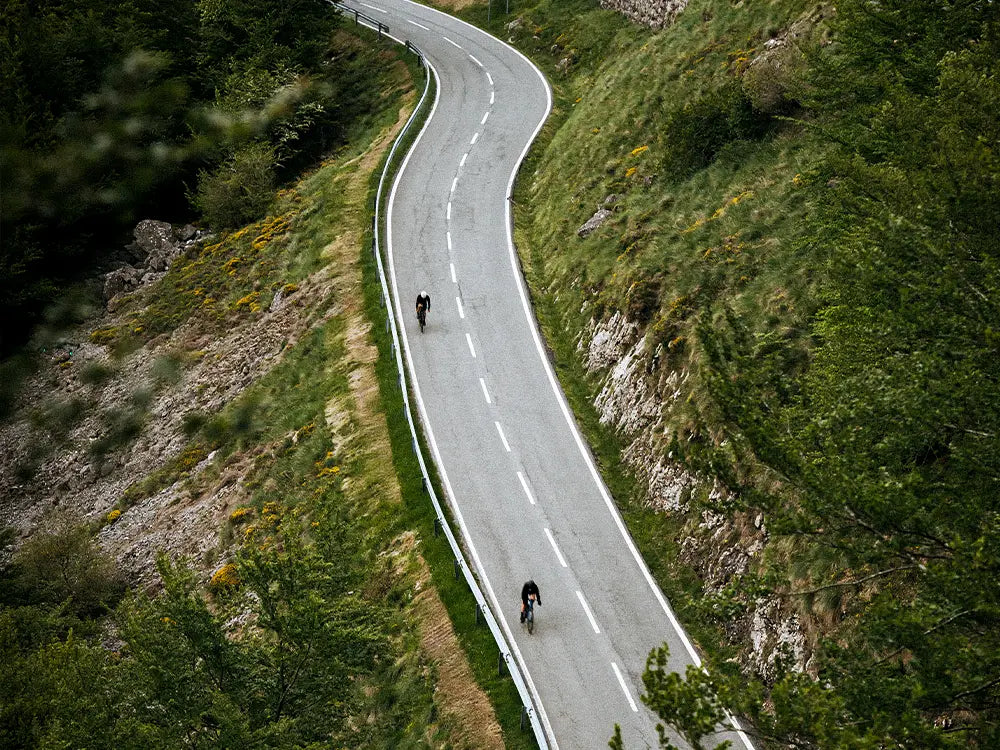



The Vuelta a España returns for its 80th edition with a route that combines tradition, innovation and some of the most demanding mountain passes in professional cycling. Over 21 stages and more than 3,150 kilometers, the race will take riders from its historic first stage in Italy to the grand finale in Madrid. From the precision of a team time trial - increasingly rare in grand tours - to legendary high mountain battles, this year's route promises excitement from the very first week.
Here we highlight four stages that stand out for their character, history and the spectacle they will undoubtedly offer.
Stage 5: Figueres - Figueres (20 km)
Wednesday, August 27th
An unusual format in modern grand tours: a completely flat team time trial in the heart of Catalonia. The teams will ride in perfect formation through the streets of Figueres on a short 20 km course, which will reward absolute precision, teamwork and pure speed.
Key: The first differences between the teams in the general classification will force to rethink strategies well before the arrival of the high mountain. Every second will count.
Reminder: The last time the Vuelta included a CRE was in 2019, when Astana flew through the streets of Torrevieja to win the opening stage. It was decisive for Miguel Ángel López to wear red for several days.
Best place to watch it: The finish line, right in the center of Figueres, will offer a festive atmosphere and the chance to see the world's best teams arrive separated by mere seconds.

Stage 13: Cabezón de la Sal - L'Angliru (202 km)
Friday, September 5
L'Angliru is one of the most feared mountain passes in cycling, a maximum test of strength and endurance. The stage starts with undulating terrain through Cantabria before heading into the Asturian mountains. The final climb averages over 10% for 8.5 km, with ramps reaching a brutal 23.5%.
Key: The last three kilometers are the most merciless, with gradients that rarely drop below 20 %. Here you can gain minutes... or see all your options vanish.
Reminder: From Alberto Contador's farewell victory in 2017 to Hugh Carthy's career-defining win over Primož Roglič and Richard Carapaz in 2020, the Angliru spares no one.
Best place to see it: The celebrated Cueña les Cabres sector is the most spectacular spot, with cyclists fighting to keep their balance on vertiginous slopes.

Stage 20: Robledo de Chavela - Bola del Mundo (159 km)
Saturday, September 13
The penultimate stage will take the race to the Sierra de Guadarrama for a high-altitude duel at the Bola del Mundo. At 2,258 meters above sea level and ramps of 20%, this high finish is as dramatic as it is decisive.
Key: The last visit was in 2012, when Denis Menchov won the stage and Alberto Contador secured his overall win after a decisive attack days earlier. More than a decade later, its fame as a final judge remains intact.
Reminder: Introduced in 2010, the Bola del Mundo earned a place in Vuelta history with Ezequiel Mosquera's stage win and Vincenzo Nibali's overall triumph.
Best place to see it: The summit offers a unique spectacle, although access is limited. Arriving early to the last ramps guarantees an unforgettable atmosphere and the image of the riders defying gravity.

Stage 21: Alalpardo - Madrid (101 km)
Sunday, September 14
The final stage is a celebration of the Vuelta and grand tour cycling. The peloton will parade into the capital before picking up the pace on the traditional circuits through the center of Madrid. It will be the last chance for the best sprinters to go for glory.
Key: Although the overall classification will be decided, pride, prestige and the stage victory in Madrid will be at stake.
Reminder: From Mark Cavendish's first Vuelta win to Peter Sagan's long sprint down the Paseo del Prado, the closing in Madrid always offers explosive finishes. In 2023, Kaden Groves won in a sprint finish after a stellar edition with three stage wins.
Best place to see it: The Fuente de Cibeles or Gran Via are the perfect spots to enjoy the sprint and the final podium ceremony.

The Vuelta is a celebration of endurance, culture and landscapes of Spain. From the precision of the team time trial in Figueres to the epic slopes of the Angliru and the Bola del Mundo, each stage is an invitation to witness human determination at its best. Whether from the sidelines or through the screen, this edition will leave stories to be told for years to come.
Tips for enjoying the Vuelta
- Plan your route: If you're cycling to a stage point, arrive before the road closes and stay to watch the race go by.
- Be well equipped: Bring food, warm clothes and comfortable footwear for standing.
- Respect the runners: Don't get too close, don't run next to them or extend your arms; any contact can cause a fall.
- Road closures: Wait for the official green flag car before resuming after the peloton has passed.


